

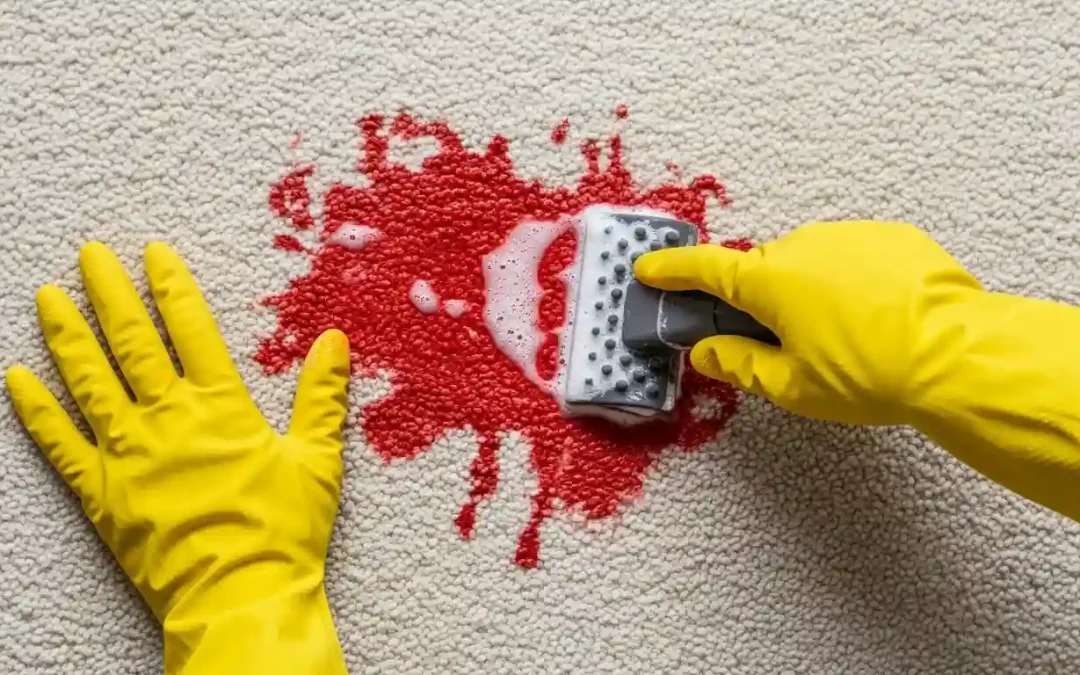
Blood stains are stressful, but most small spots on carpet can be removed if you act carefully and use the right methods. This guide walks you through what to do for fresh blood and old, set-in stains, what cleaners work best, safety tips (blood is a biohazard — take precautions), and when it’s time to hire a professional carpet cleaner. Throughout, you’ll find practical pointers that pair well with Safe Clean’s stain removal and routine maintenance advice—check our other pages about carpet cleaner choices, how to clean carpet, and how to clean carpet stains if you want broader care tips.
How should I approach a fresh blood stain on carpet?
Blotting quickly and using cold water are the most important first steps. Start by protecting yourself: wear disposable gloves and avoid touching the blood with bare hands. Use a clean white cloth or paper towels to blot the stain — press firmly and lift; don’t rub or scrub because rubbing spreads the stain and forces blood deeper into fibers. After blotting up as much as you can, apply a small amount of cold water (never hot) and continue blotting until no more blood transfers to the cloth. Finish with a mild cleaning solution (recipe below) and blot dry. Why cold water? Heat sets protein-based stains like blood; cold water helps lift them.
What’s the safest homemade solution to remove blood from carpet?
A gentle soap-and-cold-water mix is an effective first-line cleaner. Mix one teaspoon of clear dish soap with one cup of cold water. Dampen a clean white cloth with the solution and blot the stain from the outside edges toward the center. Repeat rinsing the cloth and blotting until the stain lifts. After the stain fades, rinse the area with cold water and blot dry. If a mild soap doesn’t finish the job, move to an oxygen-based cleaner (see the “what products work” section). Always test any solution in an inconspicuous spot first to check for colorfastness.
How do I remove dried or set-in blood from carpet?
Dried blood needs more work: rehydrate, use an enzyme or oxygen cleaner, then rinse and extract. Start by rehydrating the stain with cold water sprayed lightly; let it sit a few minutes to soften the dried proteins. Blot to lift loosened material. If residue remains, an enzyme-based cleaner (designed for protein stains) or a color-safe oxygen bleach can be applied following product directions. Let the product dwell sufficiently — enzymes need time to break proteins down. After treatment, rinse with cold water and blot or extract with a wet/dry vacuum if available. Repeat as needed, and allow thorough drying. If the stain still resists after two careful attempts, consider a professional extraction to avoid over-treating the carpet.
Is hydrogen peroxide safe for blood stains on carpet?
Hydrogen peroxide (3%) can be effective but must be used cautiously because it can bleach dyes. Patch-test in an inconspicuous area first. If the test shows no color change, dab a small amount of 3% hydrogen peroxide on the stain and let it bubble for a minute or two — the fizz helps lift proteins. Blot with a clean cloth and rinse with cold water. Avoid peroxide on wool or natural fibers and on dark-dyed carpets unless tested; when in doubt, choose oxygen-based or enzyme cleaners instead.
Which commercial products work best for blood removal?
Look for enzyme-based cleaners (protein stain removers) or color-safe oxygen bleach formulas.
- Enzyme cleaners break down the proteins in blood and are ideal for both fresh and old stains.
- Color-safe oxygen bleach (sodium percarbonate) is good for persistent stains on synthetic carpets — follow label directions and patch-test first.
- Avoid chlorine bleach and ammonia; they can damage fibers, discolor carpet, and react poorly with other cleaners.
- If you prefer a pro-grade option, many carpet cleaning brands sell targeted stain removal formulas — a reputable carpet cleaner can advise which product matches your fiber type.
Safe Clean recommends products labeled safe for your carpet fiber and low-residue formulas to avoid attracting dirt later.
How do I prevent a tide mark or ring after cleaning?
Treat a slightly wider area than the visible stain and rinse evenly to prevent uneven drying. Apply solutions gently and extend a small halo beyond the stain so moisture levels are balanced. After cleaning, rinse the entire halo with cold water and blot the whole area, not just the center. Use a fan to promote even drying and vacuum after the area is fully dry to lift the nap back up.
When is blood on carpet a biohazard that needs professional handling?
Call professionals if there’s a large amount of blood, if the blood might be infectious (unknown source), or if the stain covers seams, baseboards, or has soaked through to the padding. Professionals trained in biohazard cleanup have the PPE, disinfectants, and disposal methods to handle larger incidents safely. If the blood is from a medical emergency, crime, or unattended injury, contact emergency services or specialized cleaners — do not attempt to clean large-scale or potentially infectious blood yourself.
Can I use heat or steam to remove blood from carpet?
No — avoid hot water, steam, or high heat on blood stains because heat can set proteins and make stains permanent. Use cold water and room-temperature treatments. If you’re considering steam cleaning the whole carpet later, make sure the spot has been rinsed and pre-treated properly; in many cases a professional hot-water extraction after proper pretreatment will remove residues, but never apply heat during initial spot treatment.
What if the carpet pad soaked through – do I need to replace it?
If blood soaks through to the pad, odors and staining can persist even after surface cleaning; extraction or pad replacement may be necessary. A wet/dry vacuum or professional extraction can often remove contaminants from the upper pad. If odors or discoloration remain after careful extraction and drying, replacement of the pad and treatment of the subfloor may be the safest option.
Quick step-by-step checklist to clean blood off carpet
- Put on disposable gloves and ventilate the area.
- Blot fresh blood with white cloths; don’t rub.
- Apply cold water and blot.
- Use a mild soap solution; blot and rinse.
- For dried stains, rehydrate, then apply enzyme cleaner or oxygen-based product.
- Rinse with cold water and blot or extract.
- Dry thoroughly with towels and a fan; vacuum when dry.
- If stain or odor persists, repeat once or call a professional.
Final notes
Cleaning blood from carpet is doable for small, fresh stains if you take safety precautions, use cold water, and choose enzyme or color-safe oxygen-based products. Don’t use heat or harsh bleach, and call professionals for large amounts, infection risks, or when the stain reaches the padding. If you’d like, Safe Clean can recommend specific carpet cleaner products for your fiber type or schedule a professional extraction to restore your carpet fully.
FAQ – Extra long-tail questions people ask
Who should never clean large blood spills themselves? If the blood volume is large, the source is unknown/infectious, or the incident is part of a crime/medical emergency, leave cleanup to trained professionals with appropriate PPE and disposal protocols. Why did my cleaned blood stain come back darker later? Using warm/hot water or heat can set blood proteins. Also, incomplete rinsing can leave residue that discolors as it dries. Use cold water and rinse fully. What’s the difference between enzyme cleaners and oxygen bleach for blood? Enzymes digest proteins and are often best for biological stains; oxygen bleach releases oxygen to lift organic stains and is useful on color-safe synthetic carpets. Choose by fiber type and always patch-test. When is it okay to use hydrogen peroxide on carpet? Hydrogen peroxide (3%) can help on light-colored synthetic carpets but must be patch-tested first. Avoid on wool and dark dyes. How often should I deep-clean carpets after spot treatments? General recommendation is deep cleaning every 6–12 months; homes with frequent spills or stains may benefit from more frequent professional extraction.