

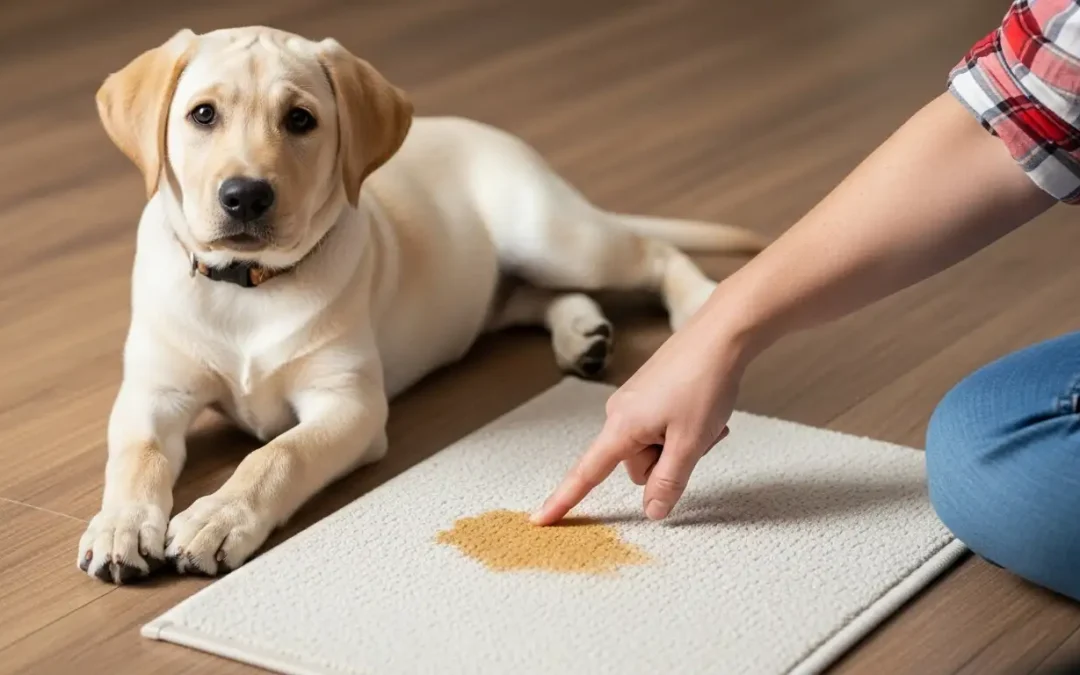
If you just spotted (or smelled) an accident, you’re probably asking: how do I clean dog urine off carpet—fast, safely, and without stains or smells lingering? Here’s the short answer:
Blot immediately, apply an enzymatic cleaner, gently agitate, then rinse and blot dry. For old stains, pre-treat with a vinegar solution before the enzyme, and finish with a thorough rinse and dry.
Below, Safe Clean provides you clear step-by-step instructions, when to use vinegar vs. hydrogen peroxide, how to stop re-marking, and when to call a pro. If you’d like a broader routine for overall maintenance, you can learn more in our quick guide to how to clean carpet, and for mixed messes, see our tips on how to clean carpet stains—both blend perfectly with the routine below.
What should I do first when I spot fresh dog urine on the carpet?
Act within 5 minutes: blot, don’t rub; then apply an enzyme cleaner.
Why it works & how to do it (quick steps):
- Blot immediately with a clean, white cloth or paper towels—press firmly to lift moisture.
- Layer & step: stack fresh towels and step on them for 10–20 seconds. Repeat until towels come up mostly dry.
- Apply enzyme cleaner (pet-safe, “urine-destroying”): saturate the area and a ½–1 inch margin around it.
- Lightly agitate with soft brush or cloth; do not scrub fibers aggressively.
- Dwell time: let enzymes work 10–15 minutes (follow the label).
- Rinse & blot with cool water; finish with dry towels.
- Airflow: place a fan to speed drying; avoid heat.
Pro tip: Enzyme cleaners break down uric acid crystals—standard soaps don’t.
How do I clean dried or old dog urine stains that smell?
Pre-treat with vinegar solution, then follow with an enzyme cleaner and a thorough rinse.
Expanded steps (for set-in stains):
- Locate the full spot: use a flashlight from a low angle to see the halo.
- Mix a pre-treat: 1 part white vinegar : 2 parts cool water; lightly mist, don’t soak.
- Blot after 5–10 minutes.
- Apply enzyme cleaner generously; allow full dwell time (often 15–30 minutes).
- Extract with cool water and repeated blotting (or a wet/dry vac).
- Dry thoroughly with fans; repeat once if odor lingers.
If residues persist after two rounds, skim our friendly walkthrough on how to clean carpet stains for extra spot-treat tactics that won’t damage fibers.
Why does the urine smell return after I’ve “cleaned” it?
Because uric acid crystals remain in the padding and release odor when humidity rises; only enzymes fully break them down.
What helps:
- Enzyme cleaners with urease/protease enzymes.
- Sufficient dwell time (don’t cut it short).
- Rinse + extract to remove broken-down residues.
- Deep airflow drying to the pad level (fans, open windows).
Avoid: masking sprays or heavy perfume—they hide but don’t resolve the source.
Which products are safe to use (and when should I avoid peroxide)?
Use enzyme cleaners first. Peroxide (3%) can help with color/odor on light, synthetic carpets—test in a hidden spot. Avoid on wool, natural fibers, or dark colors.
Simple product map:
- Enzyme cleaner: first choice for any urine (fresh or old).
- Vinegar solution (1:2 with water): good pre-treat for old spots.
- 3% Hydrogen peroxide: optional brightening/odor assist on light synthetics (dab, don’t drench).
- Baking soda: odor absorber after cleaning; sprinkle, let sit, then vacuum.
Skip: ammonia-based cleaners—dogs may mistake the scent as a “go here” signal.
How can I stop my dog from re-marking the same carpet spot?
Remove the odor completely with enzymes, then block access and retrain.
Practical steps:
- Do an enzyme round twice on repeat areas.
- Rinse and dry deeply; verify no odor remains by sniffing after 24 hours.
- Block or cover the zone for a few days (gate, playpen, or furniture).
- Place a dog bed/pad over the old zone to flip the association.
- Reinforce outside breaks and reward successes.
- Rule out UTIs or stress triggers with your vet if accidents continue.
When should I call a professional carpet cleaner?
Call in a pro carpet cleaner if the stain is large, repeatedly returns, covers multiple areas, or the carpet is wool/antique.
Why pros help:
- Hot water extraction (truck-mount or pro portables) reaches the pad.
- Urine mapping tools identify the full area to treat.
- Fiber-safe chemistry for wool, sisal, or delicate blends.
If you’re refreshing the whole room, it’s smart to learn the basics of how to clean carpet so routine upkeep complements any professional deep clean.
How do I clean dog urine off carpet without leaving a ring?
Treat a wider halo than the visible spot, rinse evenly, and blot outward-in to avoid tide marks.
Technique tips:
- Work from edges toward the center while blotting.
- After rinsing, final blot with a clean, barely damp cloth to even moisture.
- Dry evenly: place a fan so air moves across (not straight down) the area.
What’s the fastest way to clean a middle-of-the-night accident?
Blot → enzyme → blot → fan, then go back to bed.
Nightstand kit idea:
- Roll of paper towels or white cotton cloths
- Small spray bottle of enzyme cleaner
- Clip-on fan or portable air mover
- Flashlight to find the full perimeter
Where does urine travel under the carpet—and should I lift it?
Urine can wick into backing and padding. Don’t lift carpet unless you’re experienced—it’s easy to damage tack strips and seams.
What to do instead:
- Use slower saturation with enzyme so it reaches the pad.
- Follow with wet/dry extraction (or call a pro for sub-surface flush).
- If the issue is chronic in one spot, ask about pad injection treatments.
How can I clean dog urine off wool or natural-fiber carpets?
Use wool-safe enzyme cleaners, cool water, and short dwell times. Avoid vinegar and peroxide on wool.
Care notes:
- Test in an inconspicuous area.
- Blot very gently—wool felts under aggressive rubbing.
- If odor persists after one careful round, call a wool-certified pro.
Step-by-Step: How to Clean Dog Urine Off Carpet (Quick How-To)
- Blot fresh urine thoroughly; replace towels until nearly dry.
- Apply enzyme cleaner—cover the spot and a small halo.
- Wait per label (usually 10–15 minutes).
- Gently agitate, then rinse with cool water.
- Blot until dry; use a fan for 2–6 hours.
- Check next day; repeat enzyme once if needed.
- Optional: sprinkle baking soda after fully dry; vacuum later.
Want a wider routine that keeps fibers fluffy? You can learn more in our everyday guide to how to clean carpet and get bonus tips in our targeted playbook on how to clean carpet stains.
Final takeaway
Blot first, treat with a quality enzyme cleaner, rinse, then dry deeply. For old or stubborn spots, pre-treat with a gentle vinegar solution before enzymes, and consider professional extraction if odors persist.
When you’re ready to build a stain-proof routine, you can learn everyday maintenance in our guide to how to clean carpet and tap into targeted tactics in our article on how to clean carpet stains—both designed to work hand-in-hand with these pet-safe steps.
FAQ: Extra long-tail questions people ask
Who should avoid DIY urine removal and call a pro immediately?
If you have wool/natural fibers, recurring pet accidents, large soaked areas, or health sensitivities (asthma/allergies), call a professional for safe, thorough extraction.
Why does my house still smell even after cleaning one spot?
There may be multiple marked areas or odor trapped in the padding/baseboards. Map with a flashlight (low angle) or UV light, treat each area with enzymes, and ensure full drying.
How often should I deep clean carpets in a home with dogs?
Every 6–12 months, plus spot treatments as needed. High-traffic homes with puppies may benefit from quarterly maintenance.
What’s better for odor—vinegar or enzymes?
Vinegar helps with some surface odors, but only enzymes break down uric acid crystals, which is why they’re the gold standard for pet urine.
When is hydrogen peroxide safe to use on urine stains?
Use 3% peroxide sparingly on light, synthetic carpets after enzyme cleaning, and patch-test first. Avoid on wool or dark colors to prevent bleaching.