

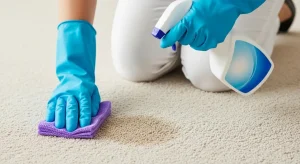
Pet stains are one of the most common carpet cleaning problems we encounter across Brisbane. Whether it’s dog urine, cat urine, vomit, faeces, blood stains or lingering pet odours, treating these issues properly requires far more than simply spraying a stain remover and hoping for the best.
At SafeClean, we’ve been cleaning carpets throughout Brisbane since 1985 and have treated thousands of pet stain problems in homes, rental properties and commercial premises. Over the past 41 years, we’ve cleaned more than 150,000 carpets and have seen just about every type of pet stain imaginable.
So, what methods do professional carpet cleaners actually use to remove pet stains and odours?
Why DIY Pet Stain Removal Often Fails
One of the first questions we ask when we arrive at a customer’s home is:
“How long has the stain been there, and what have you already used on it?”
In many cases, the homeowner has already tried:
- Supermarket stain removers
- Vinegar
- Bicarbonate soda
- DIY carpet cleaning machines
- Scrubbing the affected area
Unfortunately, these methods often make the problem worse.
Many household products only treat the surface stain while leaving urine contamination trapped deep within the carpet backing and underlay. Excessive scrubbing can also damage carpet fibres permanently.
We’ve seen situations where customers scrubbed so aggressively that the carpet fibres unravelled, creating permanent damage that no amount of cleaning could repair.
Step 1: Professional Inspection
Every pet stain treatment starts with a thorough inspection.
We look for:
- Yellowing
- Colour loss
- Odours
- The size of the affected area
- Signs of contamination in the underlay
Professional carpet cleaners often use UV blacklights to detect urine contamination that may not be visible under normal lighting.
In severe cases, we may lift sections of carpet to inspect the backing and underlay. This helps determine whether the contamination has spread beneath the carpet surface.
The inspection stage is critical because it tells us whether standard cleaning will be effective or whether specialised pet urine treatment is required.
Step 2: Urine Neutralisation
Once the affected areas have been identified, we apply professional-grade urine neutralisers.
This step helps break down urine salts that remain trapped within the carpet fibres and backing.
Unlike supermarket products, professional urine treatments are designed to penetrate deep into the carpet structure and begin neutralising the source of the odour.
This is particularly important for cat urine, which can be extremely difficult to remove once it has dried.
Step 3: Flood Treatment for Deep Contamination
For severe pet urine problems, surface cleaning simply isn’t enough.
We often flood the affected area with specialised pet stain neutralising solutions to ensure the treatment reaches:
- Carpet fibres
- Carpet backing
- Underlay
- Areas where urine has soaked through
Many pet stains extend much deeper than homeowners realise.
By thoroughly saturating the affected area with treatment solutions, we can target contamination that ordinary cleaning methods cannot reach.
Step 4: Water Claw Extraction
One of the most effective tools professional carpet cleaners use is a Water Claw.
This specialised extraction tool is designed to pull contamination out of the carpet backing and underlay.
After applying treatment solutions, the Water Claw extracts:
- Urine residue
- Contaminated moisture
- Odour-causing bacteria
- Cleaning solutions
The extracted material is then removed through our truck-mounted carpet cleaning system.
This process allows us to remove contamination from beneath the carpet surface rather than simply cleaning the visible stain.
Step 5: Enzyme Treatments
Professional enzyme treatments are commonly used when organic contamination is present.
Enzymes help break down:
- Urine residues
- Vomit
- Faeces
- Organic matter causing odours
These treatments continue working after application, helping eliminate odour-causing compounds that may remain in the carpet.
Step 6: Hot Water Extraction (Steam Cleaning)
After specialised stain treatments have been completed, we perform hot water extraction, often referred to as steam cleaning.
Hot water extraction:
- Flushes out contaminants
- Removes cleaning residues
- Cleans carpet fibres
- Improves appearance
- Helps eliminate remaining odours
Professional truck-mounted systems provide significantly greater extraction power than rental or DIY machines, allowing more moisture and contamination to be removed from the carpet.
Most carpets are dry within approximately two hours.
Step 7: Deodorising Treatments
The final stage involves professional deodorising treatments where required.
Many customers are surprised to learn that removing a stain doesn’t necessarily remove the odour.
Professional deodorising treatments target the source of pet odours rather than simply masking them with fragrance.
This helps leave carpets smelling fresh and clean once the treatment is complete.
Real Brisbane Case Study
One customer in Sunnybank Hills contacted us after attempting to remove a pet stain themselves.
The stain had been heavily scrubbed using household cleaning products.
While the pet stain itself was treatable, the excessive scrubbing had damaged the carpet fibres and caused them to unravel.
After inspecting the carpet, we explained that while we could remove the contamination and odour, the fibre damage was permanent.
This highlights one of the most common mistakes homeowners make when dealing with pet stains. The sooner professional treatment is arranged, the better the chance of preserving the carpet.
Can All Pet Stains Be Removed?
No.
One thing that comes with 41 years of experience is knowing when a stain can be successfully treated and when permanent damage has occurred.
Pet stains may not be fully removable if:
- The carpet has permanently changed colour
- Urine has caused fibre damage
- The stain has been present for a very long time
- Harsh chemicals have damaged the carpet
- Excessive scrubbing has destroyed the fibres
In these situations, carpet dyeing or replacement may be a more practical solution.
We always provide honest advice during our inspection and will never recommend expensive treatments that are unlikely to deliver a satisfactory result.
Wool vs Synthetic Carpets
Different carpet fibres respond differently to pet stains.
In our experience, wool carpets generally handle pet stains better than many synthetic fibres such as nylon.
Synthetic carpets are often more susceptible to yellowing, staining and permanent discolouration when urine is left untreated.
The type of carpet plays a significant role in determining the most appropriate treatment method.
What Should You Do Immediately After a Pet Accident?
If your pet has an accident on the carpet:
- Remove as much contamination as possible.
- For solid waste, carefully scrape it away before applying moisture.
- Pour a small amount of cold water onto the area.
- Blot with paper towels.
- Repeat the process until no more moisture transfers.
- Place fresh paper towels over the area.
- Put a heavy object on top to absorb remaining moisture.
- Contact a professional carpet cleaner as soon as possible.
The faster urine is treated, the greater the chance of preventing permanent staining and odours.
Why Trust Professional Pet Stain Removal?
At SafeClean, we’ve been helping Brisbane homeowners deal with pet stains and odours since 1985.
With more than 150,000 carpets cleaned, we understand that every pet stain situation is different. That’s why we don’t rely on a one-size-fits-all approach.
Depending on the severity of the contamination, we may use:
- UV detection equipment
- Urine neutralisers
- Enzyme treatments
- Water Claw extraction
- Sub-surface flushing
- Truck-mounted hot water extraction
- Professional deodorising treatments
By combining the right techniques and equipment, professional carpet cleaners can often achieve results that simply aren’t possible with supermarket products or DIY carpet cleaning machines.
If you’re dealing with pet stains, pet odours or urine contamination in your Brisbane home, the sooner the problem is treated, the better the outcome is likely to be.